
Hong Kong's Secretary for Security, Chris Tang, mentioned that the police are contemplating employing AI technology to identify potential instances of voyeurism due to an increasing number of reported incidents in the region.
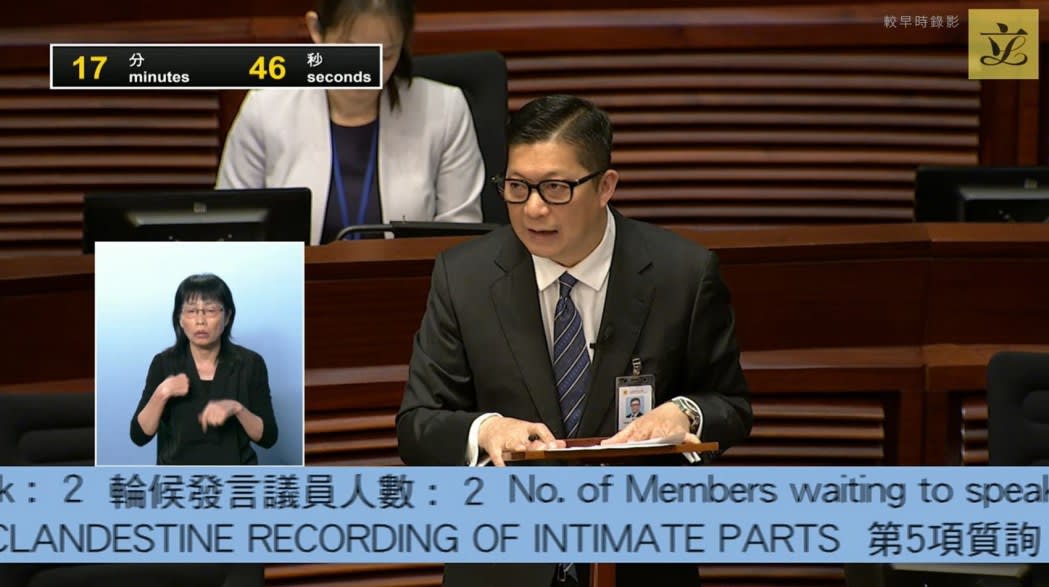
The security minister stated at the Legislative Council (LegCo) on Wednesday that employing AI technology could assist law enforcement in detecting potential instances of voyeurism, which frequently exhibit recurring patterns. Additionally, this technology could expedite the identification of fleeing suspects involved in these crimes.
Nevertheless, he didn't clarify if this would include facial recognition technology.
Tang also told Lawmakers informed that both the number of reported voyeurism incidents to the police and the number of arrests have been rising since Hong Kong made voyeurism illegal in October 2021.
According to figures shared by Tang, police recorded 99 incidents of voyeurism in 2022, which climbed to 139 in 2023 and further escalated to 172 in 2024. Additionally, the arrest numbers went up from 73 in 2022 to 81 in 2023 and then surged to 107 in 2024.
See also: Individuals find it difficult to obtain assistance even following Hong Kong’s recent legislation against voyeurism.
In 2021, the government introduced four additional offenses within the Crime Ordinance designed to tackle activities like voyeurism, secret photography, unauthorized recordings or observations of private areas, and the dissemination of such imagery. It also became illegal to publish or threaten to publish intimate pictures without permission.
The highest punishment for the four crimes is up to five years in prison.
As stated by Tang, the prosecution rate for voyeurism-related offenses was approximately 80 percent. In both 2022 and 2023, the conviction rate exceeded 90 percent but dropped to roughly 85 percent in 2024.
In separate incidents, law enforcement officials recorded 350 reports of unauthorized filming or surveillance involving private areas over the past year. They arrested 252 suspects and pursued legal action against 193 individuals. Out of these, 177 persons were found guilty.
Legislator Johnny Ng sought information regarding the sentencing ranges imposed by regional courts for distributing private images or videos without permission. Tang stated that the prison terms typically varied between three and ten months.
On Tuesday, a male instructor was imprisoned for two months due to voyeurism after he admitted to installing hidden cameras inside a toilet at an all-girls secondary school.
On Wednesday, Legislator Chu Kwok-keung questioned whether the authorities would contemplate carrying out routine inspections at educational institutions to confirm that no covert surveillance equipment was set up for improper use.
Tang stated that every instance of voyeurism reported on campus over the past few years involved hidden cameras. In contrast, most other incidents typically utilized smartphones for unauthorized recording or observation activities.
According to police data, the security minister stated that in almost 98 percent of instances, "the perpetrators utilized smartphones equipped with cameras that were readily available to carry out their criminal activities." These incidents primarily took place in locations with heavy foot traffic like public transportation hubs, transit stations, and retail centers.
He stated that there is no evidence suggesting widespread use of covert surveillance in educational institutions. He also emphasized that governmental measures ought to be grounded in actionable intelligence.
Aid in protecting journalistic independence and ensure HKFP remains accessible to every reader by supporting our team

Open the Youtube video
Open the Youtube video
Comments
Post a Comment