- READ MORE: Moment by moment, the 'destruction' California could face if a tsunami actually strikes
Imagine a wall of water up to a third of a mile high, roaring across the ocean at hundreds of miles per hour. The sheer destructive force of a mega-tsunami is almost beyond comprehension.
Unlike regular tsunamis caused by earthquakes, mega-tsunamis are often triggered by huge landslides or collapsing volcanoes .
Three regions in the US — Alaska , Hawaii , and the West Coast — face the threat of mega-tsunamis due to their proximity to unstable volcanoes, landslide-prone areas, and earthquake zones.
One dramatic example occurred millions of years ago when an asteroid impact triggered a mile-high mega-tsunami during the time of the dinosaurs, leaving traces scientists still study.
Today, one chilling possibility involves the Cumbre Vieja volcano on the Canary Island of La Palma, which could collapse into the Atlantic and send a mega-tsunami toward the US East Coast.
The Netflix series 'La Palma' brings this scenario to life, showing a family on vacation as researchers discover signs of a volcanic eruption that could unleash a catastrophic wave.
This concept originates from a 2001 study By Dr. Simon Day and Steven Ward, they cautioned that an instability in Cumbre Vieja’s western side might cause approximately 120 cubic miles of debris to plunge into the ocean, resulting in a colossal tsunami.
Their findings indicate that this wave might begin at around 2,000 feet tall near the volcano and could still surge up to 150 feet as it reaches the shores of the Americas, posing a risk to coastal urban areas.
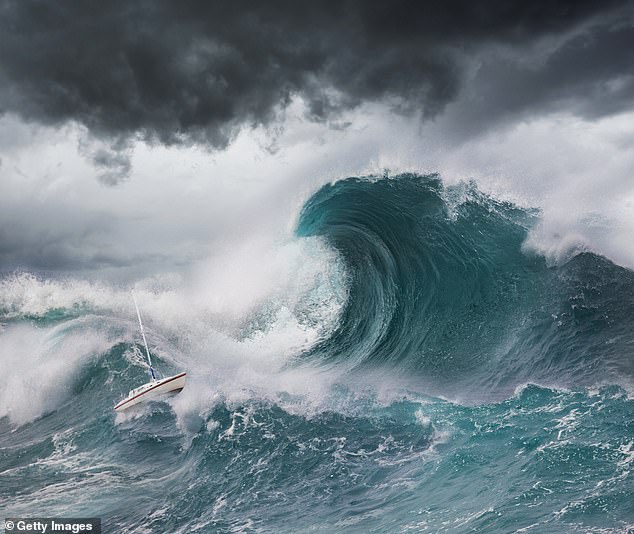
Although certain specialists contend that this Cumbre Vieja scenario is improbable, since the volcano has previously erupted without triggering such a tsunami, the U.S. confronts significantly greater imminent mega-tsunami threats in three areas: Alaska, Hawaii, and along the West Coast.
In the past, these regions have been hit by catastrophic surges due to landslides, volcanic collapses, or earthquakes—phenomena akin to what has been examined in the Canary Islands.
Currently, active geological processes and environmental alterations render these areas susceptible to potential giant tsunamis, posing risks to shoreline populations and millions of individuals.
Alaska
In 1958, an earthquake struck Alaska's Lituya Bay, causing a substantial landside that sent millions of tons of rocks plummeting into Gilbert Inlet.
The massive boulder spanned roughly 2,400 feet by 3,000 feet and is thought to have a weight of up to 90 million tons. This is comparable to dumping eight million trucks full of debris into the sea, as stated by NASA.
The outcome was the highest wave ever documented, a colossal 1,719-foot megatsunami that surged through the bay.
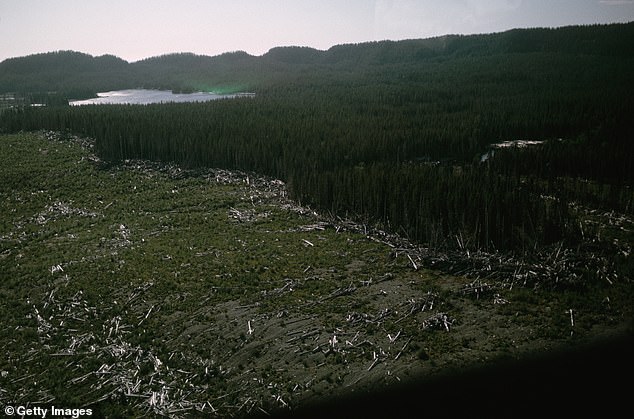
Witnesses described a loud explosion when massive icy surges demolished lighthouses and deforested entire areas, creating a distinct 'clean edge' that was observed by explorers as far back as 1786.
One fisherman found his boat raised so high that he could see over the treetops, whereas another pair vanished without a trace.
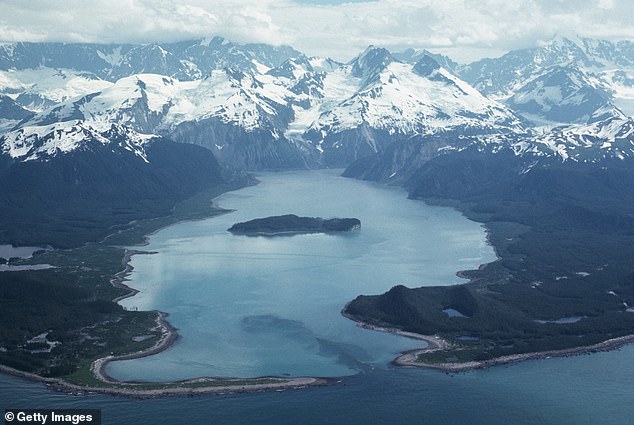
Similar to the situation at Cumbre Vieja, the colossal tsunami at Lituya Bay was triggered by a landslide. In this area, earthquakes have the potential to dislodge vast quantities of rocks from precipitous slopes, which then disturb the water and generate gigantic waves.
The narrow confines of the bay increased the wave's size, rendering it particularly damaging.
Alaska's harsh landscape and common seismic activities remain significant factors contributing to frequent landslide occurrences.
Climate change is intensifying the danger. by melting glaciers , leading to slope instability and rock dislodgement.
In 2020, fourteen researchers cautioned that the receding of Barry Glacier might lead to a landslide into Harriman Fiord, which could result in a huge tsunami comparable to the one at Lituya Bay.
Steve Masterman, who leads Alaska’s Division of Geological Surveys, highlighted that such occurrences are growing more probable with rising temperatures. Researchers are currently keeping an eye on glaciers and inclines to forecast and ready themselves for potential catastrophes ahead.
Hawaii
The volcanic islands of Hawaii have experienced massive tsunamis caused by collapsing volcanoes. Approximately 105,000 years ago, a tsunami with waves reaching up to 1,000 feet struck the island of Lanai, depositing marine life remains far above sea level on its mountain slopes.
Scientists think this occurred due to a huge volcanic collapse, akin to what could happen with Cumbre Vieja.
Similar ancient landslides, such as the 20-mile-long Nu'uanunui slide, unleashed massive amounts of rocks into the ocean, resulting in tsunami waves towering up to 300 feet that dramatically altered the shape of the island coastlines.
The volcanoes in Hawaii expand by accumulating layers of lava; however, these slopes might turn unstable and cave in, particularly during volcanic eruptions or seismic activities.
This could lead to millions of tons of rocks sliding into the sea, generating massive tsunamis that wreak havoc on adjacent islands. The Islands' precipitous topography exacerbates the peril of such occurrences.
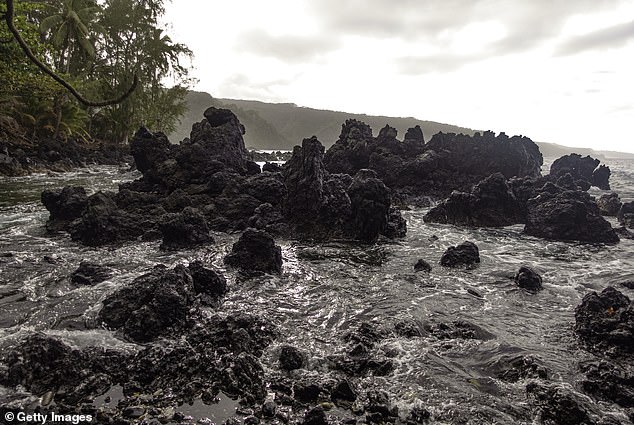
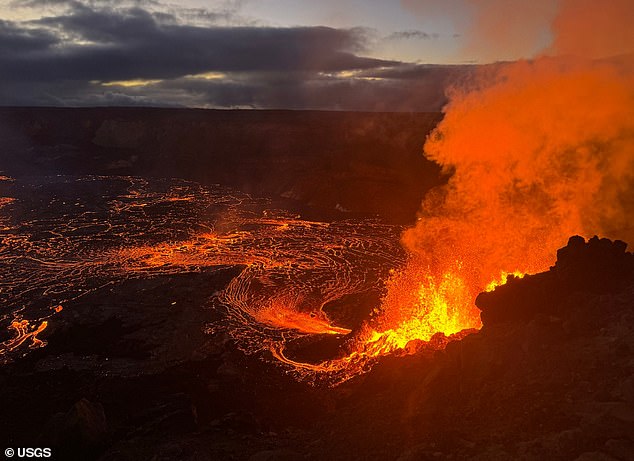
The volcanoes of Hawaii continue to be active, particularly those on the southeastern part of the Big Island—home to relatively newer volcanoes such as Kilaueu and Mauna Loa—which present the highest risk.
Actually, Kilauea has been continuously erupting and releasing lava for several months now. The most recent eruption from its current cycle concluded on May 6th.
Penn State researchers warn that these unstable slopes could collapse again, triggering massive waves.
The continuous volcanic eruptions and regular seismic activities place the islands at significant tsunami risk.
Scientists are tracking volcanic activities and landslide zones, yet inhabitants and tourists should stay prepared for unexpected tsunami warnings and evacuation instructions.
The West Coast
On January 26, 1700, a powerful magnitude 9 earthquake struck the Cascadia Subduction Zone, resulting in an enormous tsunami that devastated the village of Pachena Bay located on the West Coast.
Waves as tall as 100 feet hit the area mere half an hour following the earthquake, resulting in zero survivors.
In 1964, Huu-ay-aht Chief Louis Clamhouse recounted the oral history: "The earth trembled during the nighttime... they had no chance to flee. Everyone perished."
The quake also lowered coastal forests into the tidal zone, creating 'ghost forests' of dead tree stumps still visible today. Across the Pacific, Japan recorded a mysterious tsunami, later linked to this event.
In contrast to landslides-triggered tidal waves, the Cascadia mega-tsunami resulted from a significant seismic activity when one tectonic plate subducts under another.
This displacement moves large volumes of seawater, generating tsunamis that travel great distances. The tsunami from the 1700 event demonstrated just how extensive their reach could be.
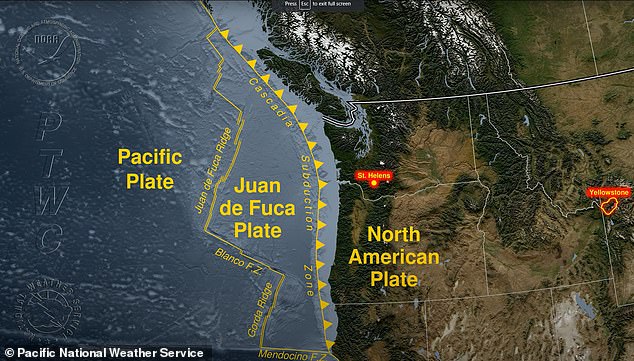
The Cascadia Subduction Zone It remains one of the most seismically active regions in North America, carrying a significant likelihood of another major earthquake occurring in the next few decades.
A similar event could trigger a tsunami like Japan's 2011 Tohoku-oki disaster, which killed nearly 16,000 people.
The US Geological Survey along with FEMA has determined that there’s a 37 percent probability of a magnitude 8 to 9 earthquake occurring in the Cascadia region over the next half-century.
Coastal areas such as Tillamook, Astoria, and Newport might be inundated, with portions of the shoreline dropping irreversibly.
Scientists are enhancing early alert mechanisms and escape strategies, yet the area's susceptibility to quakes maintains the risk of tsunamis.
Alaska, Hawaii, along with the West Coast, continue to be vulnerable to massive tsunamis because of their dynamic geological activities and evolving ecosystems.
Melting glaciers causing landslides in Alaska, unpredictable volcanic activity in Hawaii, and strong earthquakes along the West Coast pose risks of generating devastating tsunamis, much like what has occurred previously.
Even as researchers keep an eye on these risks and neighborhoods get ready via planning and education, the danger still looms large.
Read more
Comments
Post a Comment